EMBRYO TRANSFER IN MARES
Written by Dr Fiona Lacey
Embryo transfer (ET) involves the removal of an embryo (early developing pregnancy) from the uterus of one mare and the transfer of that embryo into the uterus of another mare. In recent years, the use of embryo transfer in many breeds is gradually increasing as confidence in both the technique and the reliability of the procedure grows.
Embryo transfer (ET) involves the removal of an embryo (early developing pregnancy) from the uterus of one mare and the transfer of that embryo into the uterus of another mare. In recent years, the use of embryo transfer in many breeds is gradually increasing as confidence in both the technique and the reliability of the procedure grows.
Applications:
- The applications of embryo transfer in horses include :
- * Obtaining foals from young performance mares so they can continue to compete.
- * Obtaining foals from mares that can no longer carry a foal to term.
- * Obtaining foals from mares with non-reproductive health problems.
- * Obtaining foals from mares whose owners are not prepared to risk them foaling down themselves.
- * Obtaining multiple foals from the same mare, possibly by different sires.
Process:
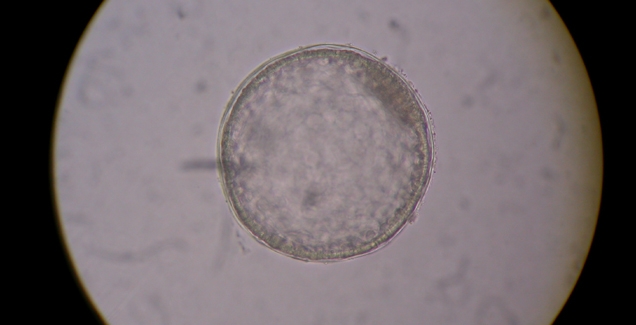
The donor mare is bred normally, using the owners choice of semen. Embryo collection then usually occurs between 7 or 9 post ovulation. Mares must be intensively managed to ensure correct timing of all procedures. The process of embryo collection involves placing a sterile catheter through the cervix into the uterus, then uterus is then filled with 1- 6L of sterile embryo flush solution which is then allowed to flow back out through the catheter and through an embryo filter. Contents of the filter are then examined under a microscope for the presence of an embryo. If an embryo is recovered, it is carefully washed and placed in a special solution and kept in an incubator while the recipient mare is prepared. The embryo is transferred through the cervix into the uterus of the recipient mare using specialised equipment. This process requires a high degree of experience and skill to maximise positive results. A significant amount of preparatory work is required to ensure that recipient mares are at a suitable stage of their cycle and ready to receive the embryo.
Selecting a fertile donor mare is paramount to achieving maximal success rates in an embryo transfer program. The best embryo donors are mature, reproductively sound mares or young healthy maidens. Research has shown that embryos produced by aged, subfertile mares are inherently defective and have low survival rates after transfer to recipient mares. Therefore, old, subfertile mares are not optimal candidates for embryo transfer, however, with hard work acceptable rates can be achieved.
Not surprisingly, semen type also influences the rate of embryo recovery, with higher recovery rates for mares bred with fresh or chilled semen. Typically in a young, fertile mare using good quality semen, we can expect an embryo recovery rate of approximately 80% and a transfer success rate of approximately 90%. These figures can vary tremendously if older or sub-fertile mares are used but give an indication of what you should expect.
While embryo transfer is quite expensive to conduct due to the amount of work and level of expertise required, it is quickly becoming a widely used technique amongst many mare owners. Historically we used a 'fixed pricing' option, however, this effectively resulted in fertile mares subsidising the sub-fertile ones. We now charge fee for service, so it is far more cost effective as an owner if you have a fertile donor mare. For more details on our pricing system or if you are interested in learning more about successfully breeding an ET foal, please contact Olive Grove Equine Clinic on 0403707495 or email info@ogec.com.au.
Selecting a fertile donor mare is paramount to achieving maximal success rates in an embryo transfer program. The best embryo donors are mature, reproductively sound mares or young healthy maidens. Research has shown that embryos produced by aged, subfertile mares are inherently defective and have low survival rates after transfer to recipient mares. Therefore, old, subfertile mares are not optimal candidates for embryo transfer, however, with hard work acceptable rates can be achieved.
Not surprisingly, semen type also influences the rate of embryo recovery, with higher recovery rates for mares bred with fresh or chilled semen. Typically in a young, fertile mare using good quality semen, we can expect an embryo recovery rate of approximately 80% and a transfer success rate of approximately 90%. These figures can vary tremendously if older or sub-fertile mares are used but give an indication of what you should expect.
While embryo transfer is quite expensive to conduct due to the amount of work and level of expertise required, it is quickly becoming a widely used technique amongst many mare owners. Historically we used a 'fixed pricing' option, however, this effectively resulted in fertile mares subsidising the sub-fertile ones. We now charge fee for service, so it is far more cost effective as an owner if you have a fertile donor mare. For more details on our pricing system or if you are interested in learning more about successfully breeding an ET foal, please contact Olive Grove Equine Clinic on 0403707495 or email info@ogec.com.au.